Cephalexin Drug: Indication, Dosage, Precaution, Side Effect , Storage, Category Type and corresponding Brands - www.genericdrugscan.com
Cephalexin
Drug Status in USA : ApprovedDrug Status in Canada : Approved
pronunciation
pronounced as (sef a lex' in)
Why is this medication prescribed?
Cephalexin is used to treat certain infections caused by bacteria such as pneumonia and other respiratory tract infections; and infections of the bone, skin, ears, , genital, and urinary tract. Cephalexin is in a class of medications called cephalosporin antibiotics. It works by killing bacteria.
Antibiotics such as cephalexin will not work for colds, flu, or other viral infections. Using antibiotics when they are not needed increases your risk of getting an infection later that resists antibiotic treatment.
How should this medicine be used?
Cephalexin comes as a capsule, tablet, and suspension (liquid) to take by mouth. It is usually taken with or without food every 6 or 12 hours for 7 to 14 days, depending on the condition being treated. Take cephalexin at around the same times every day. Follow the directions on your prescription label carefully, and ask your doctor or pharmacist to explain any part you do not understand. Take cephalexin exactly as directed. Do not take more or less of it or take it more often than prescribed by your doctor.
Shake the liquid well before each use to mix the medication evenly.
You should begin to feel better during the first few days of treatment with cephalexin. If your symptoms do not improve or get worse, call your doctor.
Continue to take cephalexin until you finish the prescription even if you feel better. If you stop taking cephalexin too soon or skip doses, your infection may not be completely treated and the bacteria may become resistant to antibiotics.
What are the precautions to be followed?
Before taking cephalexin,- tell your doctor and pharmacist if you are allergic to cephalexin; other cephalosporin antibiotic such as cefaclor, cefadroxil cefazolin (Ancef, Kefzol), cefdinir, cefditoren (Spectracef), cefepime (Maxipime), cefixime (Suprax), cefotaxime (Claforan), cefotetan, cefoxitin (Mefoxin), cefpodoxime, cefprozil, ceftaroline (Teflaro), ceftazidime (Fortaz, Tazicef, in Avycaz), ceftibuten (Cedax), ceftriaxone (Rocephin), and cefuroxime (Zinacef); penicillin antibiotics; or any other medications. Also tell your doctor if you are allergic to any of the ingredients in cephalexin capsules, tablets, or suspension.Ask your pharmacist for a list of the ingredients.
- tell your doctor and pharmacist what prescription and nonprescription medications, vitamins, nutritional supplements, and herbal products you are taking or plan to take. Be sure to mention any of the following: anticoagulants ('blood thinners') such as warfarin (Coumadin, Jantoven); metformin (Fortamet, Glucophage, Glumetza, Riomet, in Glucovance, Invokamet, others); and probenecid (Probalan). Your doctor may need to change the doses of your medications or monitor you carefully for side effects.
- tell your doctor if you have or have ever had any kind of allergies, gastrointestinal disease (GI; affecting the stomach or intestines), especially colitis (condition that causes swelling in the lining of the colon
- large intestine
- tell your doctor if you are pregnant, plan to become pregnant, or are breast-feeding. If you become pregnant while taking cephalexin, call your doctor.
What are possible side effects of this medication ?
Cephalexin may cause side effects. Tell your doctor if any of these symptoms are severe or do not go away:- nausea
- diarrhea
- vomiting
- heartburn
- stomach pain
- rectal or genital itching
- dizziness
- extreme tiredness
- agitation
- confusion
- headache
- joint pain
- watery or bloody stools, stomach cramps, or fever during treatment or for up to two or more months after stopping treatment
- rash
- itching
- hives
- swelling of the face, throat, tongue, lips, and eyes
- difficulty breathing or swallowing
- wheezing
- a return of fever, sore throat, chills, or other signs of infection
- hallucinations (seeing things or hearing voices that do not exist)
How to store the medication and dispose it of after its use later?
Keep this medication in the container it came in, tightly closed, and out of reach of children. Store the capsules and tablets at room temperature and away from excess heat and moisture (not in the bathroom). Keep liquid medicine in the refrigerator, tightly closed, and dispose of any unused medication after 14 days. .
Unneeded medications should be disposed of in special ways to ensure that pets, children, and other people cannot consume them. However, you should not flush this medication down the toilet. Instead, the best way to dispose of your medication is through a medicine take-back program.
Drug Category/Class
- Anti-Bacterial Agents
- Cephalosporins
- Antibacterials for Systemic Use
- Antiinfectives for Systemic Use
- Antibacterials for Intramammary Use
- First-Generation Cephalosporins
- CYP2D6 Inducers
- CYP2D6 Inducers (strong)
- CYP3A4 Inhibitors
- First-generation cephalosporins
| Prescribed | For the treatment of respiratory tract infections caused by Streptococcus pneumoniae and Streptococcus pyogenes; otitis media due to ... |
| Weight : | 347.389 |
| Structure | Cephalexin |
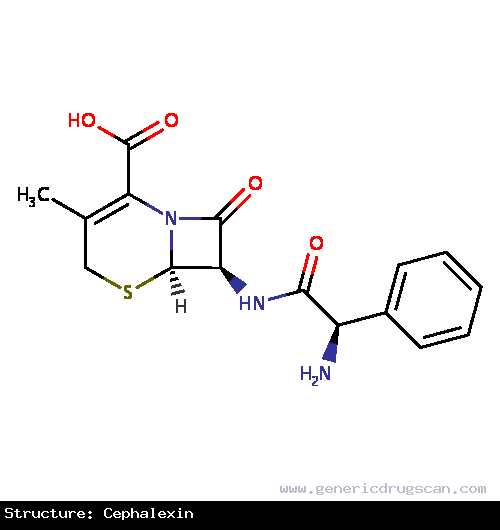 | |
| Formula | C16H17N3O4S |